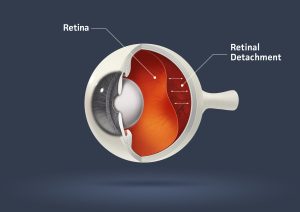
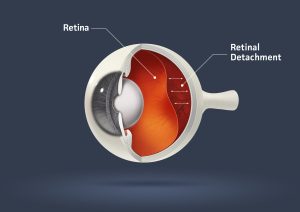
Retinal detachment is a serious eye condition that occurs when the thin layer of tissue at the back of the eye (the retina) pulls away from its normal position. While retinal detachment is relatively uncommon, it is considered a medical emergency that requires immediate attention. The overall prevalence of retinal detachment in the general population is estimated to be around 1 in 10,000 individuals per year. Certain factors, such as aging, nearsightedness (myopia), previous eye surgeries, trauma, and a family history of retinal detachment, can increase the risk. Although the condition is rare, it can have severe consequences for vision if left untreated. Recognizing symptoms like sudden onset of floaters, flashes of light, and changes in vision is crucial, as early diagnosis and intervention by an ophthalmologist can greatly improve the chances of preserving vision and preventing further complications. Regular eye exams and prompt attention to any unusual visual symptoms are important for maintaining optimal eye health and preventing potential vision-threatening conditions like retinal detachment.
If you suspect a retinal tear, it’s vital to recognize symptoms like sudden onset of floaters, flashes of light, a curtain-like shadow over your vision, blurry or distorted vision, reduced peripheral vision, or eye pain. However, not everyone experiences all these symptoms. Promptly seek urgent evaluation by an ophthalmologist if you notice any of these signs, especially if they occur suddenly or worsen rapidly. A retinal tear necessitates immediate medical attention to prevent potential progression to retinal detachment, which can lead to severe vision loss. Consulting a qualified eye care professional is essential if you have concerns about your eye health.
The best way to test for retinal detachment is through a comprehensive eye exam. During this exam, the eye doctor will dilate your pupils or use specialized widefield imaging to examine the retina for any signs of detachment. If a retinal detachment is detected, we have access to contact the retina surgeon’s office directly to direct care in specific timelines for certain conditions. Many times, emergency same-day treatment is available.
Can you live a normal life after retinal detachment?
Yes, most people can live a normal life after retinal detachment surgery. However, it is important to follow your doctor’s instructions carefully to ensure a successful outcome.
Retinal detachment can develop due to a tear or break in the retina. This can happen due to age-related changes, certain medical conditions, injury, trauma, or other causes. It’s important to be aware of signs and symptoms, such as the presence of floaters or flashes of light in your vision. Early detection and treatment are key to preserving your vision. Book an eye exam with your local eye doctor if you notice any changes in your vision.
Typically we will dilate the eye to enlarge the pupil as much as possible. Then a special lens with a mirror can be placed on the eye and a laser can be used to encircle small tears and holes to scar the retina back down in place. In cases of large holes, tears, or detachments, sometimes an injection of a special gas is used to push the retina back in place before laser is used to scar it down. In some cases a medical device called a Scleral Buckle is placed around the eye. This functions like a rubber band to apply pressure in the area of detachment to help keep the tissue in place. Retinal detachment is a medical emergency and requires prompt medical attention to preserve vision. If you experience any warning signs of retinal detachment, seek medical care immediately. Surgery is usually required to repair a detached retina. If you are concerned about symptoms of retinal detachment, book an eye exam with your local eye doctor. Early detection and treatment are key to preserving your vision.